

#Workplace Safety
By Team Seaglass
Managing Patient Lift Slings Safely: Protecting Residents and Caregivers
A Safe Lift Starts with the Right Sling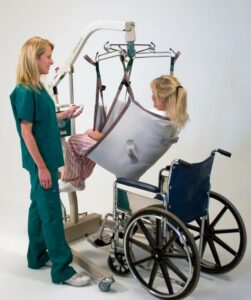
Imagine transferring a resident from their bed to a wheelchair using a mechanical lift. The lift is working properly, but the sling is too large. As the resident is raised, their body shifts unexpectedly, creating a risk of slipping or falling. Suddenly, what should have been a routine transfer could quickly become a serious incident.
Mechanical lifts help protect residents and caregivers from injuries associated with manual lifting. However, improper sling selection, maintenance, or application can create serious hazards. Safe sling management begins before the resident is lifted.
1. Choose the Right Sling: Size Matters
Patient lift slings come in different sizes, shapes, and styles to accommodate residents with varying mobility needs. An improperly sized sling may cause discomfort, poor positioning, or falls.
Before selecting a sling:
- Check the label for size, weight capacity, and intended use.
- Select a sling based on the resident’s weight, body shape, and care needs.
- Verify compatibility with the mechanical lift.
- Follow the resident’s mobility care plan and manufacturer’s instructions.
Never assume that a sling used for one resident is appropriate for another.
2. Proper Cleaning and Laundering Prevent Damage
Slings are exposed to moisture, body fluids, and contaminants. Proper cleaning helps prevent infection and preserves the strength of sling materials. Improper laundering can weaken fabric, stitching, and lifting straps.
Follow these important practices:
- Follow the manufacturer’s washing and drying instructions.
- Use approved detergents and cleaning products.
- Inspect slings after laundering and before each use.
- Remove damaged slings from service immediately.
- Never machine-dry slings. They should be air-dried to minimize wear.
Proper sling maintenance is an important part of resident and employee safety.
3. Position the Sling Correctly
Even the correct sling can become dangerous when improperly positioned. Poor placement may cause discomfort, inadequate support, or a fall.
Before lifting:
- Center the sling beneath or around the resident.
- Ensure proper back, head, and body support.
- Position leg straps correctly without twisting.
- Check the resident’s comfort and body alignment.
Explain each step to the resident and encourage participation when appropriate. Watch for discomfort or anxiety throughout the transfer.
4. Understand Hook-Style and Loop-Style Slings
Mechanical lifts commonly use hook-style or loop-style sling attachment systems. Hook-style slings connect to designated attachment points, while loop-style slings use fabric loops that attach to compatible spreader bars.
Some loop-style slings feature color-coded straps to assist with positioning.
Before use:
- Identify the correct attachment system for the lift.
- Verify sling and spreader bar compatibility.
- Follow manufacturer instructions for attachment points and strap positioning.
- Confirm all connections are secure before lifting.
Never assume that different sling attachment systems are interchangeable.
5. Apply the Sling Correctly and Check Before Lifting
Once the sling is positioned, complete a final safety check. Raise the resident slightly to confirm that the sling is secure and properly supporting the body before continuing.
During the transfer:
- Secure all straps according to manufacturer instructions.
- Check color-coded straps for correct placement.
- Raise the resident slightly and recheck positioning and comfort.
- Communicate with the resident and other caregivers.
- Follow the care plan and facility procedures for required staffing.
If the sling shifts, a strap becomes loose, or the resident appears uncomfortable, stop the transfer and correct the problem before continuing.
Recognize the Hazards Before an Injury Occurs
Improper sling management can lead to serious injuries and other safety concerns:
- Falls: Incorrect sizing or attachment may allow residents to slip.
- Muscle Strains: Improper sling selection can increase caregiver lifting effort.
- Damaged Slings: Torn fabric or worn straps may fail during a transfer.
- Infection Risk: Improper cleaning can spread germs between residents.
- Incorrect Application: Poor positioning can cause discomfort or injury.
Recognizing these hazards before lifting is essential to preventing injuries.
6. Training, Inspection, and Communication Make the Difference
Safe sling management requires ongoing training, proper equipment maintenance, and consistent communication. Caregivers should receive hands-on instruction and demonstrate safe sling application.
Supervisors should reinforce these expectations:
- Inspect slings before every use for tears, fraying, and damaged straps.
- Follow the resident’s mobility care plan and facility procedures.
- Keep slings clean, dry, and properly stored.
- Immediately report and remove damaged equipment from service.
- Wear appropriate personal protective equipment.
- Stop and ask for assistance whenever uncertain about a transfer.
Safe Today. Safe Tomorrow.
Mechanical lifts reduce the physical demands of resident handling, but their effectiveness depends on proper sling management. Taking a few extra moments to select, inspect, position, and secure a sling can prevent serious injuries.
Remember: The right sling, properly maintained and correctly applied, protects both the resident and the caregiver.
Click Here for Infographic- Managing Patient Slings Safely-infographic