

#Workplace Safety
By Team Seaglass
Needlestick Prevention in Senior Living Communities
Protecting Caregivers, Residents, and Support Staff 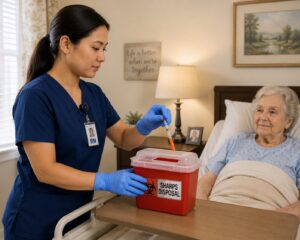
Needlestick injuries can happen quickly — during blood sugar checks, medication administration, trash handling, laundry work, or cleaning resident rooms. In senior living communities, caregivers, nurses, housekeeping, laundry, maintenance, and support staff may all be exposed to used needles or sharps if they are not handled safely.
Even a small puncture from a contaminated needle can expose workers to serious infections such as Hepatitis B, Hepatitis C, or HIV. The good news is that most needlestick injuries can be prevented with proper training, safe work practices, and the right equipment.
Common Causes of Needlestick Injuries
Needlestick injuries often occur when staff:
- Recap used needles
- Leave sharps in beds, linens, or trash bags
- Overfill sharps containers
- Rush during resident care
- Carry loose sharps from room to room
- Reach into trash containers or laundry bags without checking contents
- Fail to activate needle safety devices properly
Support staff are especially at risk when needles are hidden in linens, bathrooms, or regular trash containers.
Safe Work Practices That Prevent Injuries
Never Recap Needles
Used needles should never be bent, broken, or recapped after use. Safety devices should be activated immediately and disposed of properly.
Dispose of Sharps Immediately
Place used needles, lancets, and syringes directly into an approved sharps container right after use. Never place sharps on bedside tables, medication carts, or in pockets.
Use Safety-Engineered Devices
Many facilities now use retractable needles, safety syringes, and protected lancets designed to reduce accidental sticks. Staff should be trained on how each device works before use.
Watch for Hidden Sharps
Housekeeping, laundry, and maintenance staff should always use caution when handling:
- Bed linens
- Towels
- Trash bags
- Resident belongings
- Public restroom waste containers
Never push down trash with your hands or reach blindly into bags or containers.
Replace Full Sharps Containers
Sharps containers should be replaced before they become overfilled. Overfilled containers increase the risk of accidental punctures.
What To Do After a Needlestick Injury
If a needlestick injury occurs:
- Wash the area immediately with soap and water
- Report the injury to your supervisor right away
- Seek medical evaluation as directed by facility policy
- Complete all required incident reporting documentation
- Follow up with recommended medical testing or treatment
Quick reporting helps protect your health and ensures proper medical care.
Safety Starts With Everyday Habits
Small actions make a big difference. Taking a few extra seconds to dispose of sharps properly, check linens carefully, or activate a safety device can prevent a serious injury. By staying alert and following safe practices every day, caregivers and support staff can help create a safer workplace for everyone.
Click Below For PDF Flyer On This Subject: