

#Workplace Safety
By Team Seaglass
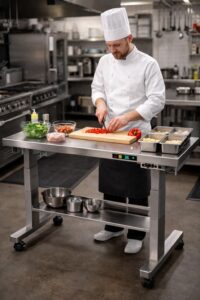 Commercial kitchens are fast-moving, physically demanding environments. Staff lift heavy stockpots, chop foods, reach into hot ovens, and stand for entire shifts. Over time, these repetitive motions and awkward postures can lead to musculoskeletal disorders (MSDs).
MSDs are injuries to muscles, tendons, and joints. They often start small but can lead to back pain, wrist and hand problems, and shoulder injuries. The good news? Most of these injuries can be prevented.
Common Injury Risks in Kitchens
Back Strains from Lifting
- Cases of food
- Large pots filled with soup
- Bulk supplies
Wrist and Hand Injuries from Repetition
- Chopping, slicing, scooping, and stirring uses the same motions again and again which causes strain on tendons
Shoulder Injuries from Reaching
- Reaching up to high and low shelving puts stress on the shoulders and lower back
Pain from Standing All Day
- Standing on hard floors for long shifts can cause back, knee and foot fatigue
- Leaning over prep tables increases back strain
How to Prevent Muscle Strains in Commercial Kitchens
Set up Workstations Properly
- Adjust work surfaces to the appropriate height for each worker
- Avoid storing heavier items above or below the waist, and keep commonly used items within easy reach
- Keep elbows close to the body when working
- Use carts to serve meals in dining rooms, rather than carrying multiple plates/trays
Think Before You Lift
- Never lift items over 35 lbs- Get Help
- Use carts or mechanical lifts to transport goods to/from stock rooms
- When lifting is necessary, bend with your knees, not your back, and never twist your body
Use the Right Tools
- Keep knives sharp (dull knives require more aggressive movements)
- Use ergonomic tools for food preparation (ergonomic tools are designed to fit the hand more comfortably during repetitive tasks)
- Stand on anti-fatigue floor mats
- Use mixers instead of hand stirring when possible
Rotate Tasks and Take Short Breaks During Long Shifts
- Take short stretch breaks
- Switch tasks during long prep times
- Change positions when possible
Preventing injuries in the kitchen doesn’t mean slowing down… it means working smarter. Simple steps like setting up workstations correctly, using mechanical aids for lifting, choosing ergonomically designed tools, and taking short breaks can make a big difference. When staff feel good physically, they work better, stay safer, and help create a stronger, more productive kitchen.