

#Workplace Safety
By Team Seaglass
 Wheelchairs are used daily in senior living communities for transporting residents to meals, activities, therapy, and personal care. Because they are so common, the risks are often overlooked. Safe operation is not about strength or speed—it’s about communication, proper positioning, awareness, and teamwork. Follow these wheelchair operating guidelines to protect you and residents from injury.
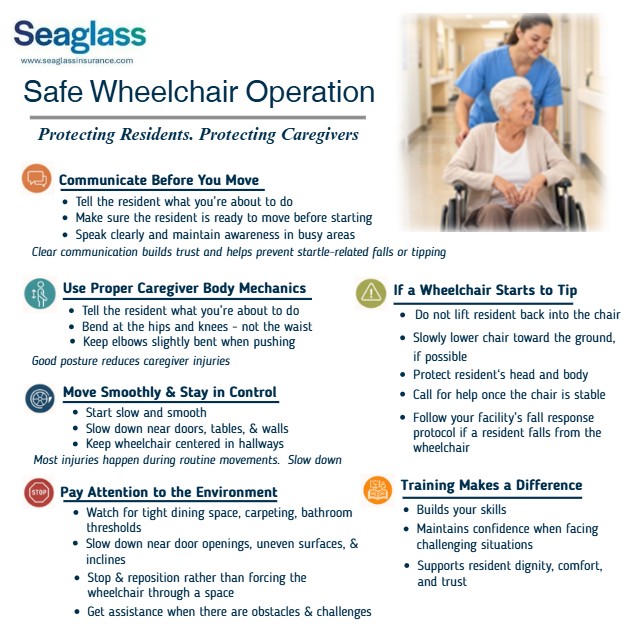
Communicate Before You Move
- Explain to residents what you are about to do before commencing
- Make sure the resident is ready before starting
- Speak clearly and maintain awareness in busy areas
Clear communication builds trust and helps prevent startle-related falls or tipping.
Use Proper Caregiver Body Mechanics
- Keep feet shoulder-width apart
- Bend at the hips and knees—not the waist
- Keep elbows slightly bent when pushing
- Push handles should be adjusted to a comfortable height whenever possible to reduce shoulder and back strain
- Stay close to the wheelchair and move the chair without leaning
Good posture reduces back, shoulder, and knee injuries during long shifts.
Move Smoothly and Stay in Control
- Start moving slowly and smoothly. Avoid sudden pushes, turns or stops to prevent jarring the resident
- Slow down early when approaching tables, doors, or walls
- Watch footrests, toes, and hands—they’re easy to miss
- Keep the wheelchair centered in hallways to avoid collisions
Most incidents happen during basic movement, not advanced skills.
Watch the Environment
Senior living environments present unique challenges. Pay special attention when these conditions are present:
- Tight dining spaces
- Carpeted rooms and area rugs
- Bathroom thresholds
- Outdoor walkways and ramps
Caregivers should:
- Slow down on inclines and uneven surfaces
- Keep more weight on the rear wheels when crossing soft flooring
- Plan routes in advance to avoid tight turns or obstacles
- Stop and reposition rather than forcing the wheelchair through a space
A few seconds of planning can prevent injuries that lead to lost time and discomfort
What to do if a wheelchair starts to tip
- Do not try to stop the fall with your back or arms alone—this can cause serious caregiver injury
- Lower the chair toward the ground in a controlled way, if possible, to reduce impact
- Keep the resident’s head protected and guide their body rather than jerking the chair upright
- Call for help immediately once the chair is stable
What to do if the resident slides forward or sideways in the wheelchair
- Stop the wheelchair right away and lock the brakes
- Support the resident’s upper body and trunk, not just the arms
- Do not lift or pull suddenly—this increases injury risk
- Reposition safely or use trained techniques and equipment to return the resident to proper seating
What to do if a resident falls from the wheelchair
- Do not lift the resident back into the chair
- Assess for pain, injury, or changes in responsiveness
- Follow your facility’s fall response protocol and notify nursing or clinical staff
- Use mechanical aids and team assistance if repositioning is needed
Training Makes a Difference
Regular wheelchair safety refreshers help caregivers maintain strong skills and stay alert during daily routines. Ongoing training supports safer care by helping you:
- Reduce resident falls and near-miss incidents
- Protect yourself from back, shoulder, and strain injuries
- Stay confident and in control during busy shifts
- Support resident dignity, comfort, and trust
Safe wheelchair operation is part of quality care—creating a safer workplace for everyone. Reach out to your supervisor for additional information.
 Click image to print