

#Workplace Safety
By Team Seaglass
Stocking Product Safely in Storage Rooms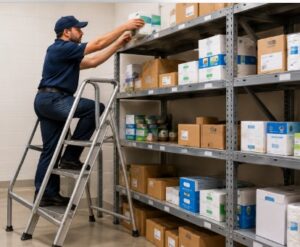
Stocking products may seem like a routine part of the workday, but lifting boxes, reaching for supplies, pushing carts, and working around shelving can create injury risks. Back and shoulder strains, slips and falls, falling objects, and overexertion injuries can occur when storage areas are poorly organized or employees try to handle more than they safely can.
A safer storage room starts with good organization, proper equipment, and smart material-handling practices.
Set Up the Storage Area for Safety
Where products are stored can make a significant difference. Heavy or frequently used items should be placed where employees can reach them without excessive bending, squatting, or overhead reaching.
Whenever possible:
- Store heavy and frequently used products between knee and shoulder height, preferably near waist level.
- Keep heavier products off high shelves where they may be difficult to control when lowered.
- Place lighter, less frequently used products on higher shelves.
- Keep aisles and walking areas clear of boxes, carts, packaging, and other trip hazards.
- Make sure shelving is stable and in good condition before loading products.
- Keep fire equipment, exits, and electrical panels accessible.
Taking a few extra minutes to organize products properly can eliminate unnecessary lifting and reaching every time an item is retrieved.
Reduce Manual Lifting
Not every box or supply needs to be carried by hand. Employees should look for ways to reduce the amount of lifting and carrying required throughout the day.
Use the right tool for the job. Carts, dollies, hand trucks, and other material-handling equipment can help move products more safely. Large shipments can also be broken into smaller, manageable loads rather than trying to move everything at once.
If an item is too heavy, bulky, or awkward to control safely:
- Do not attempt the lift alone.
- Ask a coworker for assistance.
- Use a team lift when appropriate.
- Use available material-handling equipment.
- Make several smaller trips instead of overloading a cart or carrying too much at one time.
Lift and Stock with Care
When manual lifting is necessary, employees should get close to the product, maintain a stable stance, and use their legs to help perform the lift. Avoid twisting the body while lifting or carrying. Instead, move the feet and turn the entire body toward the destination.
Employees should also avoid stretching or standing on inappropriate objects to reach upper shelves. Use an approved step stool or ladder rather than climbing on shelving, boxes, chairs, or carts.
Keep the Area Clean and Report Hazards
Good housekeeping is an important part of stocking safety. Spills, damaged boxes, loose packaging, and products left in aisles can quickly create hazards.
Employees should:
- Clean up or report spills promptly.
- Remove empty boxes and packaging from aisles.
- Report damaged or unstable shelving.
- Watch for leaking or damaged products.
- Return carts and equipment to their designated locations.
- Wear appropriate footwear, gloves, or other personal protective equipment required for the task.
Think Before You Stock
Safe stocking does not have to slow the work flow; a well-organized storage room often makes tasks easier and more efficient. Before moving or storing a product, consider its weight, storage location, frequency of use, and whether equipment or assistance is needed.
A few seconds of planning can prevent an injury that could affect an employee for weeks or months. Organize the space, use the right equipment, and ask for help when a load cannot be handled safely.
Click Here for Infographic- 60 Sec-Stocking Product