

#Workplace Safety
By Team Seaglass
Safe Disassembly, Moving, and Reassembly of Hospital Beds
A Practical Safety Guide for Senior Living Communities
Hospital beds are used every day in senior living communities—but moving them can be risky if it’s not done the right way. Whether you are turning over a room, performing maintenance, or relocating a resident, following a safe and consistent process helps protect both staff and equipment.
Why This Matters
Moving hospital beds is a high-risk task if proper steps are not followed. Common issues include:
- Back strains and other musculoskeletal injuries
- Pinch or crush injuries to hands and fingers
- Damage to the bed or its electrical components
- Safety risks for residents if the bed is not reassembled correctly
Guidance from the Occupational Safety and Health Administration recommends reducing manual handling risks by using proper equipment, teamwork, and safe procedures.
Step 1: Prepare Before Disassembly
A safe move starts with good preparation—not lifting.
Pre-Move Checklist: 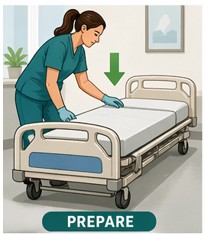
- Remove the resident, mattress, linens, and accessories
- Lower the bed to its lowest position
- Unplug the power cord and secure it
- Check the bed for damage (loose parts, broken wheels, worn cords)
- Clear the path (hallways, doorways, elevators)
- Assign at least two trained staff members
Tip: Never try to move a hospital bed alone. Teamwork is essential
Step 2: Safe Disassembly of the Bed
Most hospital beds can be taken apart into smaller, lighter sections.
General Guidelines: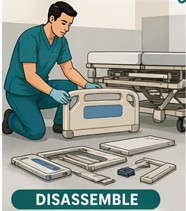
- Follow the manufacturer’s instructions for your specific bed
- Remove:
- Headboard and footboard
- Mattress support sections (if removable)
- Control cords and electrical connections
- Place all parts in a secure, labeled container or cart
- Do not force parts apart—if something is stuck, stop and reassess
Safety Reminders:
- Watch for pinch points around joints and hinges
- Keep hands clear when separating parts
- Use proper lifting techniques—bend your knees and keep the load close
Step 3: Moving the Bed Components
Even when taken apart, bed parts can still be heavy and awkward.
Best Practices: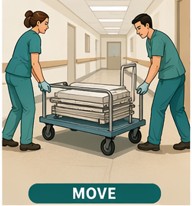
- Use carts or bed-moving equipment whenever possible
- Lock wheels when loading and unloading
- Keep pathways clear and dry
- Move slowly, especially through tight spaces
- Communicate clearly with your team
Ergonomic Tips:
- Push instead of pull when possible
- Keep your back straight
- Avoid twisting while carrying
Step 4: Reassemble the Bed Safely
Putting the bed back together correctly is just as important as taking it apart.
Reassembly Checklist: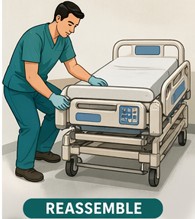
- Reconnect all frame sections securely
- Reattach the headboard and footboard
- Reconnect electrical components properly
- Plug in the bed and test all functions:
- Raising and lowering
- Head and foot movement
- Wheel locks
Final Check:
- The bed is stable and level
- Wheels lock properly
- No loose parts or exposed wires
- Mattress fits correctly
Build a Safer System
Senior living communities can reduce injuries by creating a simple, consistent process.
Key Strategies:
- Create a step-by-step workflow for bed moving
- Use carts or tools to reduce manual lifting
- Provide regular staff training and refreshers
- Inspect beds before and after each move
Final Thought
Moving hospital beds safely takes planning, teamwork, and attention to detail. When staff follow a clear process and use the right tools, they can reduce injuries, protect equipment, and keep residents safe.
Safe habits make a difference—every move, every time.